Monday, October 17, 2011

Packard: Ask the Man Who's Driven One

Packard's old advertising slogan used to be, "Packard: Ask the man who owns one." I happen to be a man who's driven one.

Driving someone else’s fully restored, concours-quality automobile worth about half the value of your house is a great honor and pleasure! Driving it through modern stop-and-go traffic while trying to change lanes is not.

And yet here I am, behind the wheel of the most incredible 1934 Packard Eight convertible that I’ve ever seen. You’d think that with it being painted such an extroverted two-tone green, other drivers would yield to your movements. But instead, I’m having to maneuver around some guy in a Nissan pickup who just has to have that particular spot in the line of traffic, and the woman in the Kia who just ducked into the lane in front of me and stood on her brakes. Hey lady, 4500 lbs of car doesn’t stop on a dime, you know. It’s obvious she doesn’t have a clue.

It’s nothing I haven’t dealt with on my daily commute to work, but today, I can’t help but sweat and worry a little, albeit with a huge grin on my face.

In a car like this, you’re somebody. You’re no average schmo driver. You’re the guy that adults wave to. You’re the guy to who kids point. “Whaddup, Al Capone!” yells a group of teenagers.


I could do this all day.

In fact, that’s exactly what I’d been doing all day. The owners were asked to show the Packard at a classic car show (along with some of their other cars), and needed it driven there. I’d spent about an hour driving it this morning, five hours fielding questions from bystanders, and was on the return trip when we ran into traffic.

In 1934, Packard introduced several improvements to their lineup and called the new cars the 1101 series. They were built on 136” wheelbases (in the case of this car), and powered by a 320 cubic inch straight eight engine producing 120 horsepower. The car I’m driving is a standard Eight model referred to as a convertible coupe. It’s color, a slightly yellow mint green with emerald green trim, is indeed a real Packard color combination. The cars featured such modern technology as a self-lubricating chassis, suspension ride control, and automatic choke. The transmission is a three speed, but only second and third are synchronized which means you don’t dare put it into first gear unless you’re at a complete stop. The flywheel on these must be massive!

Much to my surprise, it’s relatively easy to drive. You climb in over the running boards, and take your spot on a springy, leather bench seat. Despite the car’s massive length, you can easily reach over and touch the passenger door, so it’s only about as roomy as something like a Miata. Most of that space is taken up by an enormous steering wheel that probably measures two feet in diameter, and doesn’t allow for much knee space for leggy guys like me. Its thin rim and shiny black finish feel great in your hands, but the horn button and one of the three spokes completely block the speedometer positioned down by your right knee.

The gauges are lovely ivory pieces with beautifully machined grandfather clock-like indicators. You’ll find gauges for speed, oil pressure, engine temperature, voltage, and a large clock. The ignition switch is all the way to the right.

When you reach over and turn that key, a slow starter silently turns over the engine, which starts with little drama. The mechanic has set this car up wonderfully, and there’s no need to use the spark advance or choke adjustment levers located on the steering wheel.

I’ve been told that this car doesn’t like fast shifts, so I take great care as I reach out to find the black rubber knob on top of a very long shift lever. The clutch pedal goes to the floor, and I slowly move the lever all the way to the left, and back towards me for first gear. Through the shifter, I can feel the straight-cut gears aligning, and I give it a slight tug to get it fully engaged.

I let out the clutch, give it some gas, and the clutch releases in a very soft fashion. Despite the size and fairly lazy 7.00:1 compression, the engine revs pretty well. First gear is pretty short, so I reach for the shifter again, push down on the clutch pedal, and make the dogleg towards the dashboard for what I’m hoping is second gear, and not reverse. On the way there, I let the engine revs come down slightly, and slowly push the shifter into second gear. I’m thrilled when I let out the clutch and find that I was right! Third gear comes up quickly again, and the process is repeated once more.

Once moving, the car is relatively easy to drive. The cabin is filled with a mechanical song that is a combination of eight cylinders and gear whine, but it’s not offensively noisy. The large steering wheel made steering light and responsive (albeit with about 4” of dead space in the turn, and about 20 turns lock-to-lock), and the engine developed enough torque that I could leave it in third gear for pretty much the entire time, except for a dead stop. At one point, we were travelling an indicated 57mph down an interstate highway, and the car seemed happy to have maintained that pace for hours.

It’s no speed demon, though. Sixty miles per hour probably takes 25 seconds or more, and I couldn’t help but wonder if a tall 4th gear would have been a great addition to newer cars.

The whole time you’re driving it, you can’t help but be aware of the size, though. There’s no zipping through traffic in this machine, and while the small side mirrors mounted to the spare tires are pretty, they’re virtually useless. You find yourself counting cars and colors via the inside rear view mirror, and making mental notes like, “After the second white car, I can change lanes.” And even then, you do it slowly lest you don’t see some idiot in your blind spot and punt him off the road.

Ventilation consists of two small doors, about the size of an envelope, cut into the cowl. Make no mistake, it still gets very warm in there. I tend to think the car did this to me on purpose, as it forced me to roll down the windows. Once I did, all that mechanical noise disappeared. I could hear the low rumble of the engine with a slight note of valve clatter, and it turned into the road-going machine that it was meant to be.

The car seemed to be talking to me, and together we channeled the spirits of those who had driven it over the last 77 years. I peered out over the long hood, and imagined myself pulling this stately car out of the Packard dealership. It was once someone’s dream car, and I hoped that somehow, their spirit still knew that someone was enjoying the car as much as they had all those years ago.

I know there was at least one spirit with me on that drive. My father’s two true automotive loves were MG TDs, and pre-war Packards. He never owned either one, but I know that, somehow, Dad was riding shotgun with me that day. Out of the corner of my eye, I could occasionally catch a glimpse of him wearing his tweed slouch hat, his elbow out the window, and through his thick beard, he was grinning even more than I was.

As I write this, the last of the dirt accumulated from the drive is probably being cleaned off, and the car prepared for winter hibernation. And while the car’s memories of this trip are being washed away, my memories of a day with this great car will stay with me forever.

I feel truly honored to have been asked to watch over this lovely piece of art for a while during its history, and I can’t thank the owners enough for allowing me the privilege to do so. 


.

Wednesday, October 12, 2011

The Road That Used to be a Racetrack

The weather today in central Maryland is chilly and rainy. And, like any terrible parent, I'm standing outside our parked car with my 6-year old on a dead-end road in the middle of rural Carroll County.

So why am I subjecting us to this misery? Because we're there to listen to race cars. There's a great field of entrants today, and the sound of flathead V8s, modded small block Chevys, and Offey-powered dirt cars are enough to make any car guy swoon.

There's a great crowd on hand for today's racing action, too, and the smell of cheap hotdogs and soft pretzels wafts across the grandstands in a delicious haze.

Then I feel a tugging at my jacket. "Can we go now?"

Suddenly, the cars stop running and the crowd quiets. I open my eyes and, once again, I realize we're still standing out in the rain. I start looking around for the stands, the pits, all the modified race cars. But they're nowhere to be found. All that I see is a McMansion with a manicured lawn.

Where we're standing is the approximate location of what used to be turn three at Condon Raceway, just west of what is now Eldersburg, MD.

Years ago, I was talking to an older gent who mentioned there had once been a race track in that general area. Over the years, I never came across anyone else who knew about it, much less its true location, and it got shelved in my mind. A recent conversation with a car-guy friend reminded me of it, and I went in search of more info.

Condon Speedway was a third-mile dirt track oval that ran modifieds from 1953-1959. No one particularly famous ever raced there, yet for almost seven seasons, the men who brought out their cars and ran along the knife-edge of adhesion that is dirt track racing were heroes in their own right. Names like Mullinex, Morgan and Culp are still well known in the area, even if their history, and that of Condon Speedway, is not.

Sadly, the last remnants of the track have been long since erased from the landscape. But if you park along the gate of trees on Gina Court, take pause. If you squint through the daylight, you'll see the ghosts of a mechanic tuning a carburetor, a young man selling programs, and the sound of vintage cars powering their way to victory.

But if you smell hotdogs, odds are it's just one of the neighbors having a cookout.

Special thanks to Larry Jendras, Jr. for his patience in answering all my questions, and helping to keep alive the motorsports history of Maryland.


Arial view of Condon Speedway vicinity, 1995.
If you look closely, you can still see the oval's outline through the trees.

Photo courtesy of Google Earth.


.

Saturday, July 30, 2011

"What kind of car do you like to work on?"

A couple weeks ago, I came outside one night to find my Mazda MX-6 puking a large amount of coolant onto the driveway. After some investigation, I discovered that the water pump gasket had failed. And I got scared.

Why? Because Mazda shoehorned a 2.5 liter V6 transversely under the hood, and made the car a front-wheel-drive machine. Add to that a pair of overhead cams per cylinder head. Add to that the process of replacing the water pump entails removing most of the accessories off the engine, and the timing belt. And then on top of all that, I've never, ever changed a timing belt on a car.

I won't bore you with details, but the long story short is that three of us successfully replaced the timing belt, water pump, belts and gaskets over the course of a leisurely seven hours.

So while having lunch with a friend the other day, we were discussing the complex nature of something like a water pump/timing belt job on an MX-6, and the various other oddball repairs that some cars require.

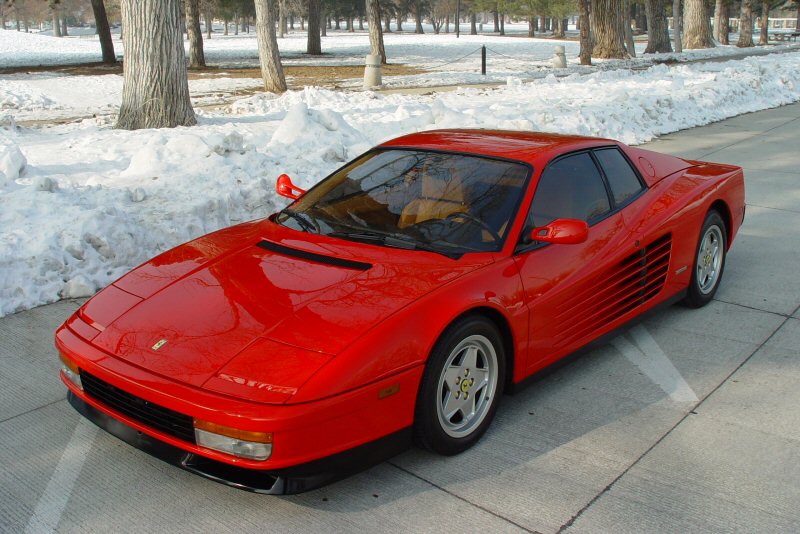
We discussed the strange, unnecessary complexity of changing a PCV valve on an early Mazda3 (Step 1: Remove the intake manifold). Then we touched on other things like changing the water pump on a Ferrari Testarossa (Step 1: Remove engine). I then showed him some of the scars on my hands with accompanying stories.

"So what kind of car do you like to work on?" he asked.A simple question, but one that I took a minute to think about.

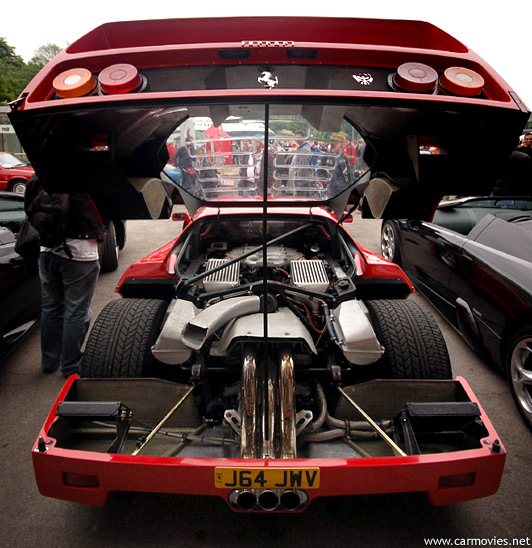
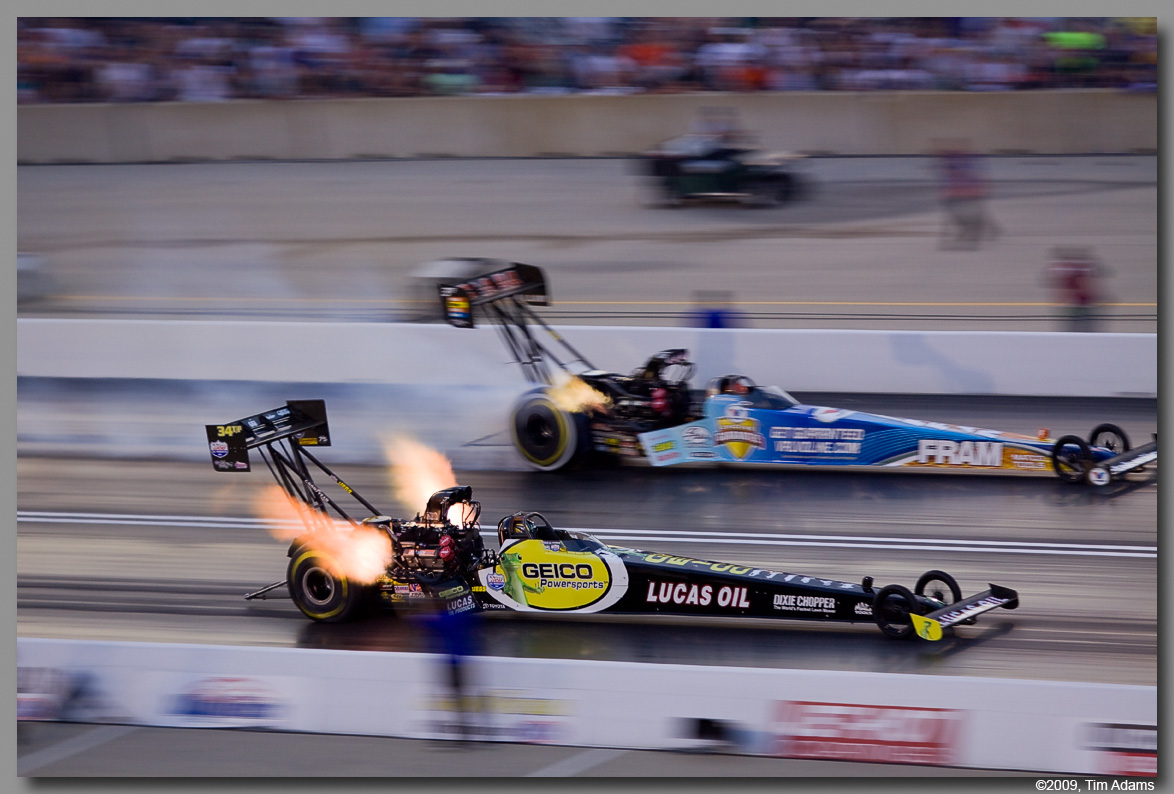
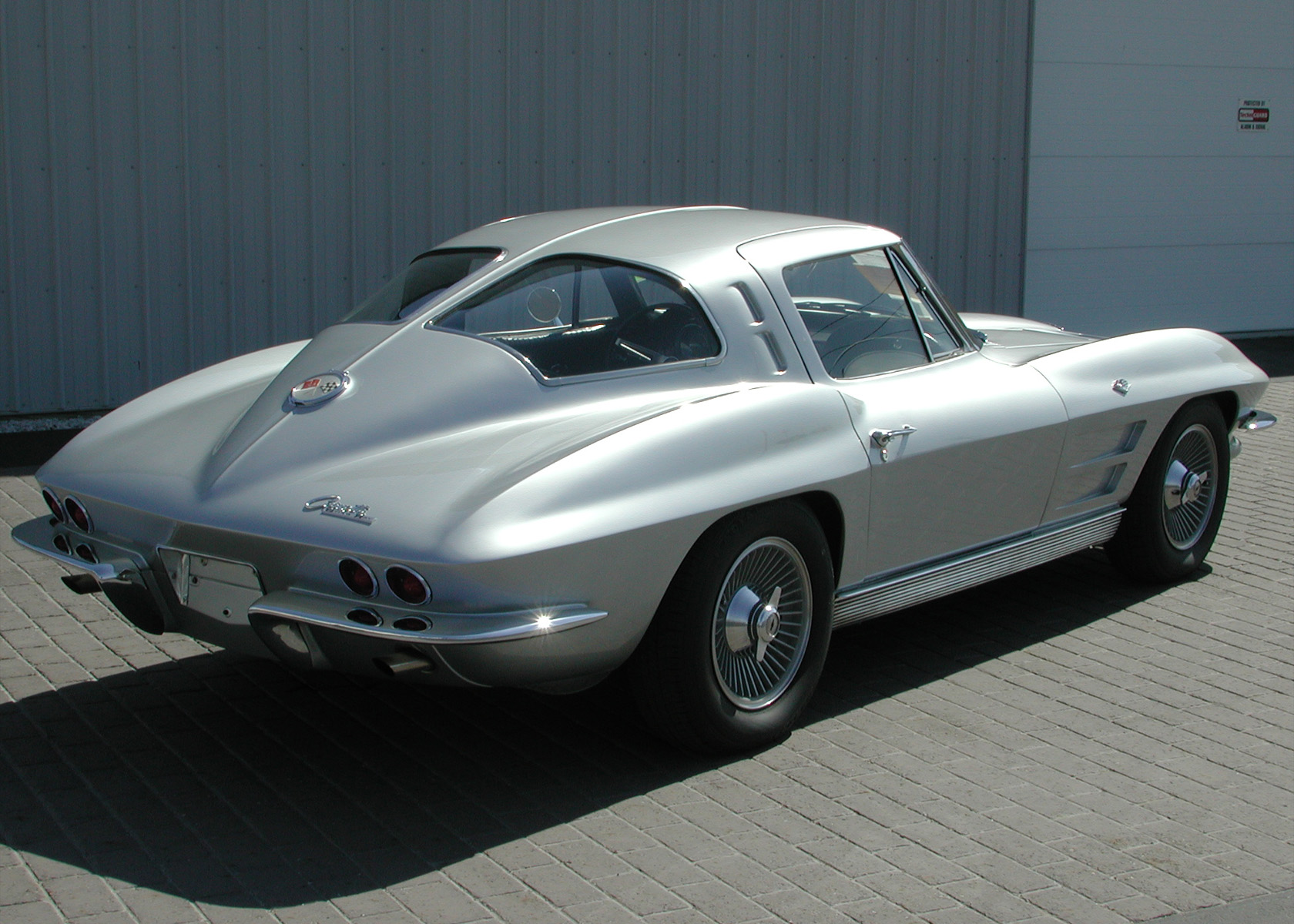
The options went spinning through my head as I found myself putting down my sandwich and staring into space. I mean, any car guy worth his salt would probably blurt out something like a twin-turbo Ferrari F40, or maybe a Bugatti Veyron with four turbos. Perhaps a sweet muscle car, like a '59 Corvette with a blown big block. Most of us probably have dreams of spinning wrenches in the pits at Indianapolis, or fine-tuning the air/fuel mixture on a Top Fuel dragster.

What could I say? There were so many cool cars that I could rattle off, and I'd had a hand on several cool cars over the years. But then I got thinking about how miserable it'd be to have to remove the intake manifold on a quad-turbo W16 Bugatti engine. And the castings on the F40 were probably poor. And I'd probably completely screw up the mixture on a supercharged motor and blow the heads off of it. I cringed a bit, but I had an answer.

"Pickup trucks," I said.

"Pickup trucks?" he asked while raising an eyebrow. "All the cool cars you know about, and you're telling me you like to work on pickup trucks???"

It's true. Ever work on one? You don't need to jack it up. You don't need to break your back bending down to it. The drivetrain is relatively straightforward. All the parts are big and pretty easy to get to. Heck, I've even crawled inside the engine bay and sat on the fender while working on a couple full-size ones.

After all, we know how much fun it is to drive and brag about all that trickle-down race car technology is on a car, but when it comes to working on the beasts, I'll happily take the simplicity of a big full-size truck.

Image from 4wheeloffroad.com


.

Saturday, June 18, 2011

LeMans 2011 in Review

Now that the dust has settled, and parts of Alan McNish's AUDI R16 have come back down from orbit, it seems that LeMans was not in short supply of drama this year!

Here are a few of the highlights:

And hour into the race, Alan McNish in a LMP1 AUDI passed the Luxury Racing Ferrari 458 (in GTE Pro) just under the Dunlop bridge. The rules at LeMans state that the slower cars can hold their line, and the prototypes go around them. Unfortunately, McNish went inside the Ferrari on a turn, causing the two cars to touch, sending McNish and the AUDI into a horrific crash. Amazingly, there were no injuries, including McNish, but the race was run under a full-course yellow for an hour. The Ferrari would return to the race a few hours later.

Sometime around 11pm, Mike Rockenfeller in another factory AUDI R16 came into contact with another Ferrari 458 (in GTE Pro), which caused the AUDI to spin and hit the guardrail at an estimated 170+mph. The car blew apart, sending the cockpit over the fence and into the woods. Amazingly, Rockenfeller also walked away unscathed, but spent the night in the hospital for observation.

In the end, it came down to Simon Pagenaud in the #9 Peugeot chasing down the #2 AUDI of Andre Lotterer for the overall lead. Despite Pagenaud's push to the end, the difference from 1st to 2nd place was decided by only 13 seconds! A heartbreaker for the Peugeot team, who was perhaps the most miserable-looking team ever on the podium.

Another great milestone was for Corvette Racing, who brought their yellow Corvette ZR-1 to a class win in GTE-Pro on not only the 10th anniversary of GM returning to LeMans, but also the 100th anniversary year of the founding of Chevrolet.

Full race results can be found here.

Another great year at LeMans - what did you think? Leave us a comment, or talk to us on Facebook and tell us your favorite parts, memories, or pledge your Peugeot vindication for next year.


.

Thursday, June 9, 2011

Le Mans 2011

If you love the 24 Hours of Le Mans like I do, then this weekend is a big one for you. Friends know not to call during the (somewhat spotty) broadcasts on SPEED channel, my wife knows I won't be mowing the lawn until the race is unceremoniously pre-empted by NASCAR practice laps, and I'll be shopping for enough snacks and carbohydrates to keep me fueled for at least 20 of LeMans' 24 hours.

As the saying goes, "You can't tell the horses without a program," so every year, I like to give a little bit of a background on the race - who to watch, what to look for, and some personal opinions and observations thrown in for color.

So what should you look for? Check out the class listings below. We'll even do a race recap on Monday, so stay tuned.

LMP1 (LeMans Prototype 1 - the big, fast cars)
Once again, it's the classic AUDI/Peugeot matchup for the overall win. Both teams are running diesel engines which have proven to be fast and easy on fuel consumption. Of special note is the introduction of the new AUDI R18, which is a closed-cockpit car (which is a switch from many previous years of open-cockpit AUDIs). This means the tires are narrower, but the new roof (and ungainly trailing dorsal fin) should mean higher speeds and stability along the two long straights at LeMans. As always, we'll be cheering for Tom Kristensen, the most winningest driver in LeMans history. Currently, AUDI holds the #1 and #2 spots, with Kristensen's car in fifth, with Peugeot 908s all around.

Diesel should be an interesting race this year, since the top seven cars are all within 1/2 second of each other.

Henri Pescarolo has come close to an overall win a few times in the past, and his team is always hungry for a win, even after some real heart-breaking finishes. Unfortunately, they've switched to a gasoline-powered engine this year, and will start the race in 9th, nearly eight seconds per lap slower than the pole-sitting AUDI. The Toyota-powered Lolas of the Rebellion Racing team should have an interesting battle all their own with the Pescarolo team, and are on the grid in 8th and 10th place. Unfortunately for the factory Aston Martins, they only managed to qualify in 22nd and 25th positions (20+ seconds per lap slower than the pole-sitting AUDI), so they will not pose a serious threat this year.


LMP2 (smaller, lighter, but less powerful versions of LMP1)
LMP2 typically plays second fiddle (usually third or fourth fiddle) to the rest of the race. The teams keep making them faster, but due to the class rules, the cars end up being tremendously handicapped. In smaller races, LMP2 cars have been known to score an outright win over the faster LMP1 class, but not at LeMans. This, incidentally, is why Roger Penske's Porsche RS Spyders (that dominated the ALMS series) never participated at LeMans. The team was invited, but he declined out of protest since the P2 class was hobbled so much that an overall win wouldn't be possible.

Nevertheless, if the French TV feed decides to show some LMP2 action, enjoy it like you would a rare delicacy. All the cars seem to be within a second of each other, respectively, so it could come down to tire and fuel management to decide the class winner.


LM GTE
This year marks the first year of the LM GTE classes, which are retain 95% of the rules for the class previously known as GT2 (there is no longer a GT1 class). The vehicles are based on road-going cars and must have gasoline engines only. The minimum production number is 100 copies for major manufacturers (25 for small ones), and use an engine of which a minumum of 300 have been made. Cars with carbon chassis are allowed as long as there are a minimum of 300 produced. Engines have to remain in their same location, and supercharged engines have air restrictors.

The end result should be a great "run what you brung" series, with the likes of such enthusiast favorites as the Corvette ZR-1, BMW M3, and Porsche 911 RSR battling with newcomers like the Ferrari 458, Lotus Evora and even an Aston Martin Vantage and a Ford GT.

One of the intriguing things that has been added is the split of the LM GTE class into "PRO" and "AM" classes. The PRO class allows for three professional drivers to pilot each car, while "AM" only allows for one professional driver per car, with the other two being amateurs. Between the driving and the factory money in the PRO class, it should quickly become a game of the "haves" versus the "have nots".

Nevertheless, the ones to watch should be the duels between the Corvette Racing ZR-1s against the BMW Motorsports M3s. The Bimmers set the class lead, with the lead car being nearly 2 seconds per lap faster than both Corvettes. Also keep an eye on the silver/red Porsche 911 RSR of the Flying Lizard team, a particularly talented and fast crew, that is currently 12th in class.

The real X-factors in the LM GTE class are the new Ferrari 458s. Although a PRO team has one sitting 2nd in class at the moment with a blistering speed not far off the lead BMWs, fuel management and reliability could either put the cars out front, or bench them one by one. To no one's surprise, the Lotus Evoras are in dead last, and third from dead last.

Enjoy the show - I know I will!

AUDI R18 (LMP1 class pole position)
Photo from lemans.org

Signatech Nissan Oreca (LMP2 pole position)
Photo from ototweet.com

BMW Motosport M3 GT (LM GTE Pro pole position)
Photo from bwmblog.com

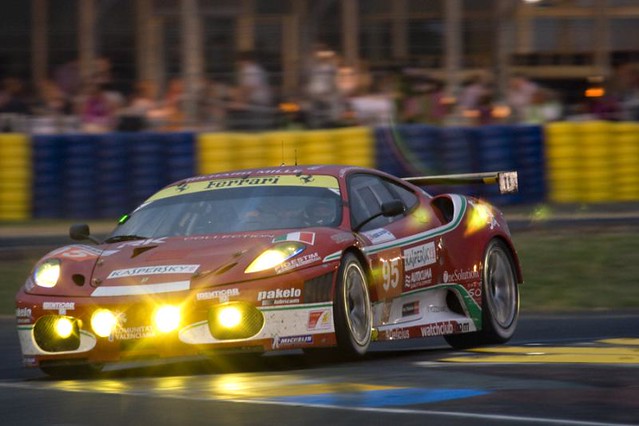
AF Corse SRL Ferrari 430 Competizione (LM GTE AM pole position)
Photo from Andrew Goldstraw on Flikr


.

Thursday, June 2, 2011

The Magic of Le Mans

I remember being about 14 years old when I first found out about the 24 Hours of Le Mans. I happened to catch it on some TV sports channel, and I remember watching the Sauber team running their pair of silver Mercedes-Benz C9s to an overall win. The cars were unlike anything I'd ever seen before - they were sleek and swoopy and spacecraft-like, had a great engine sound, and fire blasted from the exhaust pipes on every shift. Best of all, there was a bunch of equally wild-looking cars racing, too.

At the first commercial break, I learned that I was watching an endurance race called the 24 heurs du Mans. The premise was simple: Drive as fast as you could through eight miles of the French countryside, then do it for 24 hours straight.

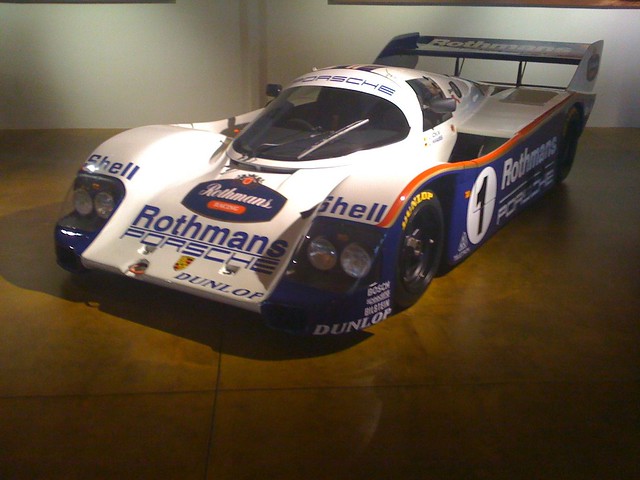
Ingrained in my memory is watching those silver Mercs streak along the track, then through the fast right-hander known as "Tetre Rouge" ("redhead"), then on to the 4-mile long straight, famously known as "Mulsanne". Imagine what an 800+hp car can do when you floor it for four miles! (Ed. note: during the late 1980s, the turbocharged Porsche 962s were reportedly hitting speeds in excess of 250mph.)

To a young car geek, it was all magical. As I got older, I read even more about the race, and fell in love with its rich racing history and tradition. Here are just a few:

- Until 1970, the race was started with the cars not placed on a grid, but parked along the pit wall. When the starting flag was waved, drivers would run across the front straight to their awaiting cars, start them up, and drive away with reckless abandon! During the last year of this type of start (1969), famous driver Jacky Ickx protested the unsafe start by casually strolling across the track to his car, where he took great care to fasten his safety belt. Although he was one of the last to start the race, he eventually won.

- In 1962, Ferrari brought their new for 1962 (and darling of the ball) Ferrari 250 GTO, driven by Mike Parkes. During an altercation with an Aston Martin, the GTO ended up in the sand trap at the end of the Mulsanne straight. The car ended up completing only 52 laps before it retired with overheating issues. When the car was restored in the early 1990s, sand was still found wedged in the nose.

- During the 1949 race, Luigi Chinetti won the race in a Ferrari 166MM after driving for over 23 1/2 hours straight (his co-driver became ill after being in the car only 20 minutes).

- Even non-race fans are familiar with the spraying of champagne by race winners. This was started by Dan Gurney when he won the 1967 race with AJ Foyt in a Ford GT40.

- The worst crash in motor racing history happened in 1955 when Mercedes-Benz brought one of their 300 SLRs to the race. Near the beginning of the front straight, the Mercedes-Benz collided with an Austin Healey. The impact broke the Merc's engine from the chassis, sending it skipping through the crowd, killing 86 spectators.

Victories, tragedies, and traditions alike, it made for 24 hours of drama that only a racing enthusiast would get into. These days, the cars are still very exotic, but both the track and the cars are much safer. Fortunately, this hasn't hurt the stories that are told during those 24 hours.

To this day, I still wake up early on a Saturday to catch the first several hours of the race. I get chills watching the field roll off the grid, and hear the engines come up to speed as they come out of the last of the Porsche curves and sweep onto the front straight. I'll watch through the night, catch a nap in the early hours of the morning, then am back up at 5am to watch the last four hours. What can I say? It's my Superbowl.

This year, the race is scheduled for June 11-12, starting at 9am EST (3pm French time) and is being shown by the Speed Channel here in the States. If you find yourself around a TV, give it a few laps, even if you've never watched another race, or are a dyed-in-the-wool NASCAR fan.

There is truly no greater spectacle in motorsports!


.

Sunday, May 29, 2011

Bench Racing, and Other Great Lies #6

Here's one from Christian's past that he's offered to share as part of the next great installment in the wildly-popular, Bench Racing, and Other Great Lies series.

We love to hear stories, whether they're true, or just a great lie. So click the "Contact" link in Christian's profile, and send 'em to us. We'll even help edit, and maybe exaggerate a lie or two ourselves!

--------------------------

One day during my Sophomore year in high school, my friend, Steve, stopped me in the hall. "What are you doing after school? 'Cause I have my Dad's Trans Am today."

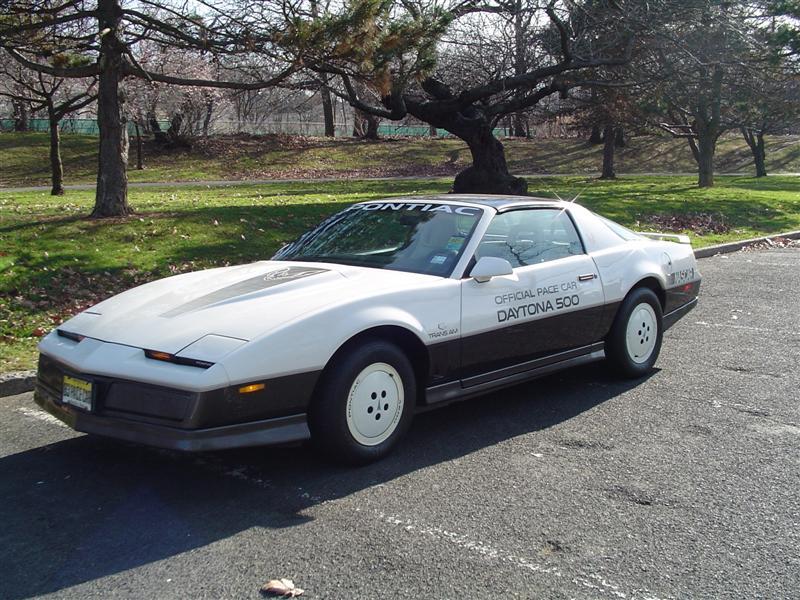
This was a rare treat for both of us. Steve's father was a company executive who owned a handful of interesting toys including a big block '68 Corvette convertible and this car, a 1983 Pontiac Trans Am with the Daytona Pace Car package. We immediately made plans to go for a drive after school.

Within minutes of the final bell ringing, Steve and I were jumping into the car like, well, two kids who borrowed Dad's cool car.

We cruised it to a local 7-Eleven where we eased it into a prime parking spot right in front of the door. The car was loaded to the hilt with all the goodies, including the aerodynamic wheel covers and a 5-speed, and the white paint made the wedge-shaped car look like the shark that it was.

We'd only been inside a couple minutes when we came back outside to find a large gentleman admiring the car. A few pleasantries were exchanged between him and Steve as I got into the car. As I did, I overheard the man say to Steve, "I see you have a dent in the rear quarter panel and a crack in the spoiler. I do bodywork, and would be happy to give you a price on the repair." Steve thought that sounded like a good idea, and agreed to pull around the side of the building to get a quote.

I almost smacked him when he got back in the car.

We pulled around the side of the building, parked between a dumpster and an old blue and tan '77 Thunderbird. Steve got out to talk to the man when another man got out of the Thunderbird and popped the trunk. I wished that Steve had left me with the keys, but I stayed in the car and locked my door.

What eventually made me get out of the car was several loud, metallic banging noises followed by the car shaking. This was caused by a slide hammer punching eight holes in the fender. For the next five minutes, I watched as Steve's eyes remained the size of dinner plates covered in a big heaping of panic. Before he could panic any further, plastic filler was made up and spread over the holes. "All it needs is paint," said the first man. "That'll be $300."

The scam had been set, and these guys had two naive 16-year-olds in their sights. Steve gulped hard, and took a step towards the man. "That's not right. You said you were going to give me an estimate. Not actually fix the car."

Unfortunately for Steve, the man took a step towards him, and the second guy (still holding the slide hammer in his hand) was glaring at me. "I don't know what you're talking about. You owe us $300, mother fucker. And you're going to give us that money, right now."

"I'll have to go to the ATM across the street," Steve said.

"That's good. We'll follow you over. Don't try anything stupid." And that's exactly what we did.

We got back into the cars, and Steve pulls the Pontiac to the driveway. "Hold on. TIGHT." We were about to try something stupid.

For the next ten minutes, the two cars bobbed and weaved through traffic on Route 202 in Delaware at high speed, cutting through neighborhoods, blowing through stop signs and red lights, all the time hoping we'd come across a police officer. If a bridge had been out, we'd have jumped it, Dukes of Hazzard style! Hal Needham couldn't have asked for a better car chase.

Eventually, we cut through a shopping center and barreled down a side road. We pulled into a neighborhood, and came to a screeching halt in the driveway of an elderly gentleman who was mowing his lawn. He must have thought we were crazy, but seeing the panic in our eyes and our shaking voices convinced him that we were telling the truth. He and his wife let us use the phone, and Steve called his father to explain everything.

Forty-five minutes later, Steve's father pulled up in the driveway, and escorted us back to school where my ride home was waiting.

I don't know if the car was ever repaired, but it took me years to not go into a blind panic every time I saw a blue '77 Thunderbird.


Photo from http://autopolis.wordpress.com


.

Monday, May 23, 2011

The Idiots of Seville

I was surfing through my music library the other day, when I came across, "Love is Life" by a Brit-Club music band called Candyflip. The music lives up to the band's name, and has a very trippy-sounding, semi-House feel to it.

It's not really what I'm into anymore, but throughout 1990-1992 year, my friend Vinnie and I used to play that album constantly!

We loved it because the bass used to travel throughout the interior of Vinnie's car, and we'd put the windows down and crank up the music wherever we went. In hindsight, it's no wonder neither of us got laid back then.

So while our music wasn't particularly appealing, the third part of our trio was - a 1976 Cadillac Seville.

Vinnie had assumed ownership of it during his Sophomore year in high school. It had belonged to his grandparents, who had purchased it brand-new in 1975 and loaded it with every option. It was finished in white with a blue vinyl top and plush blue Velour interior. Once his grandmother became too old to drive, she passed it along to Vinnie. It had a grand total of 31,000 miles on it when Vinnie got his hands on it, and had probably never traveled over 40mph. Vinnie and I changed all that.

In 1976, Cadillac released the Seville model as a top-of-the-line model (it actually cost more than the 1976 Eldorado) aimed towards the impending fuel and emissions problems that plagued American carmakers in the mid-'70s. Nevertheless, GM stylist Bill Mitchell (famous for the initial look of the Corvette Sting Rays and 1960s-era GMs) designed a wonderfully-proportioned 4-door sedan that gently sloped towards the rear, arguably later copied by the current Rolls Royce Phantom.

It featured an Oldsmobile-sourced 350ci small block V8 with a Bendix electronic fuel injection, all backed up by a TH400 automatic transmission and either a 2.56 or optional 3.08 rear end. The whole thing was good for 180hp and 275 lb-ft of torque just off idle. The torque came in handy, as it was required to lug around two idiots, a CD player, and 4300lbs of vehicle!

Despite its seemingly lack of performance numbers, Vinnie drove all four doors off that car. We'd hustle it down narrow, twisty back roads like it was a sports car. It would cruise from stoplight to stoplight like it was it's job. And we discovered that it would glide along for many, many miles of highway at speeds that buried at least one gauge needle in the process.

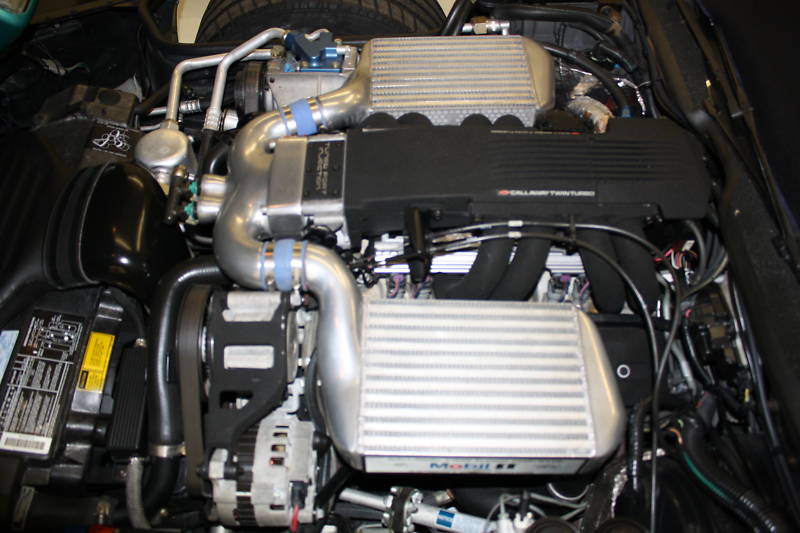
It's certainly a good thing that neither one of us knew anything about cars, because we'd sit and fantasize about fiberglass body panels, a roller cam, and some wicked twin-turbo setup we'd somehow find on a junked Callaway Corvette. We could dream with the best of them!

Unfortunately, it was a bad thing that neither one of us knew anything about cars, because the car proved to be very unreliable. The aging electrical system seemed to throw fits, whether it was an oddball accessory that was shorting out, or the alternator burning out again.

After a few years of investing a small fortune into the Seville, Vinnie's parents suggested he get rid of the car. He ended up with a used, 4-cylinder '92 Mustang notchback (ironically in the same color combination as the Seville). We both cried when he traded in the Caddy.

I still occasionally come across one of those boxy Sevilles, and the memories of those days of my youth become numerous enough to have filled the car's ginormous trunk. I just don't think anyone who owns one ever plays anything as cool as Candyflip.


Photo from OrlandoClassicCars.com


.

Monday, April 4, 2011

Bench Racing, and Other Great Lies #5

The next great installment in the wildly-popular, Bench Racing, and Other Great Lies series.

We love to hear stories, whether they're true, or just a great lie. So click the "Contact" link in Christian's profile, and send 'em to us. We'll even help edit, and maybe exaggerate a lie or two ourselves!

-------------------

I once heard a story about a really great mechanic. He was one of those great mechanical geniuses that didn't believe in opening up a parts catalog to fix something. Instead, he'd happily disassemble ridiculously complex things (like a tilt & telescoping steering column), fix whatever needed fixing, then reassemble it.

On one particular high-mileage car that was in for such a repair, the car's owner noticed that the gauge panel was out of the car, and the mechanic was holding it in his hand. "You know, with the gauges out, it'd be really easy to wind 100,000 miles off that odometer," he said to the mechanic.

"OH GOOD LORD, NOOOOO!!" replied the mechanic. "That would be illegal! But," he continued,"if something were to happen where the odometer become incorrect, there's no way that I'd know what the correct mileage was, and I'd have to rely on the owner to tell me."

Surprised by the mechanic's honesty and integrity, the owner shrugged and let the mechanic go on about his business. Just as he turned away to go look at something that caught his eye, he heard the mechanic exclaim, "Oops!" followed by the sound of the gauge cluster hitting the floor. The odometer gears became displaced, and little black numbered dials were seen spinning on the floor.

The mechanic looked up to the car owner, and said, "Oh jeez, do you remember what the mileage was?"

"About 38,000," the owner said with a grin.


Image from bikernet.com


.

Friday, April 1, 2011

Playing Petter Solberg

The tach sweeps past 5,000rpm and I look down the road, eyes focused on the quickly approaching guardrail on the outside of a tight left hander. I step on the clutch, and heel-toe shift down into second, blipping the throttle and spooling up the big turbo. Halfway through the turn, I let the clutch out, and all 300 horses are put down to the pavement.

About the time the engine reaches redline, there appears a quick right. No problem, except the new pavement that’s been put down has a nice bump in it. Near the apex.

The front suspension unloads causing instant understeer. Milliseconds later, the rear lightens. Tires chirp, three differentials and a host of yaw sensors jump to action. The rear steps out, and we drift through the turn looking like Petter Solberg. My passenger starts shouting pace notes, and we give a quick cheating-death cheer before reaching for third, and the next corner.

What’s this machine we’re driving? An older Subaru WRX STi. The beastmaster of the Subaru stable. The WRC car with a full interior. The car that comes factory-tuned by Subaru Technica International (STi) with all the parts you wish you could own.

Over the last couple decades, Subaru has made a few attempts at building a performance-oriented sports car. Among them was the odd wedge-shaped Subaru XT-6, and the bigger let-down with the funky windows, the Subaru SVX. Subaru’s parent company, Fuji Heavy Industries, specializes in everything from aircraft to power plants to construction equipment, and a company like that has no business building sports cars.

And thank God they quit trying.

The result is a pudgy 4-door sedan (and now a wagon - Ed.) that will do 0-60 in 4.6 seconds, and a quarter-mile in 13.5 seconds. Stock. On a bad day.

Just approaching the car is imposing. The first thing you notice is the massive hood scoop feeding the top-mount intercooler. Then the car’s stance hits you, showing off flared fenders and a ride height a half-inch lower than it’s little brother, the WRX. But it’s pretty hard to miss the ironing board-sized rear spoiler. Our tester came with the optional gold-painted BBS alloy wheels, and the only color the purist in me thinks is worthy of being on an STi, World Rally Blue Pearl.

Inside, you’ll find a pair of STi seats trimmed in blue suede with deep side bolsters. They look more supportive than they actually are, but aren’t nearly as compromising as a dedicated race seat. Once in the driver’s seat, however, you’ll really enjoy the thick-rimmed MOMO steering wheel. The feel is wonderful, and looks trick.

Peering through the wheel, you’ll also notice red electroluminescent gauges, dominated by a center-mounted tachometer. Our tester was also equipped with the Performance Gauge Pack which includes a turbo boost gauge, oil temperature gauge, voltmeter and gauge pack housing which mounts to the center of the dash. A metal trimmed shift knob on a 6-speed transmission rises from the floor. It all provides for an environment that feels stylish, yet very purposeful, and reminds you that this isn’t your Mom’s Legacy wagon.

Of particular interest are three switches you’re not likely to find in any other production car. The one on the dash is connected to a pump under the hood that sprays cool water on the intercooler. Another on the center console is marked “DCCD”, or Driver Controlled Center Differential. And there’s a mysterious dial close by.

If you’re smart, you’ll leave the DCCD switch turned to auto. Otherwise, you’re in for a quick lesson in handling characteristics and weight transfer. You see, Subaru has equipped the STi with a manually adjustable center differential. Leave it on auto, and it splits the torque 35/65 to the front/rear wheels. But if you adjust it to one of the six manual settings, you can get the car to induce everything from controlled understeer to holy-crap-that’s-fun oversteer.

It’s like driving a video game.

And driving is definitely what this car is all about. Turn the anodized metal ignition key, and the 2.5 liter flat-4 starts with a sedate growl that runs through a custom STi-tuned exhaust. It’s surprisingly quiet inside the car, but is very deep and intimidating from outside. The engine note will seem odd to most people, as horizontally-opposed engines tend to do. Unfortunately, below 4,000rpm, the STi’s engine sounds very industrial, like a cross between an old Porsche and a city bus. But above that, the growl is surreal with just a small hint of a whoosh from the IHI turbo topping out at 14.5psi.

However, once you put the car in first and step on the gas, you’ll find the only thing you’re aware of is looking down the road to see what’s ahead, because you’ll be there very quickly. The engine has a very short powerband, but reaches it’s maximum 300 lb-ft of torque at 4,000rpm and tops out at 300hp at 6,000rpm. The 8.2:1 compression means the car is very docile before the turbo kicks in, and the STi tends to wallow around in it’s 3263lb curb weight. But once the turbo comes up to full boost, the car consumes asphalt at an impressive rate.

Braking is equally impressive due to the large 4-piston Brembo calipers on 12.7” front rotors with 2-piston rear Brembos on 12.3” rotors. Stopping from 70-0 takes just 157ft, and pedal feel is firm and controllable. The pads also heat up nicely, but their competition nature means they tend to be noisy when cold and give off a lot of dust.

Handling is a different story. The 225/45-17 Bridgestone Potenza RE070 tires have sharp turn-in and very high levels of grip. But what keeps things entertaining is the computerized all-wheel drive system and differentials. Leave the center differential set to “Auto”, and the car does a fine job of cornering.

It’s at this point that the driver becomes the weak link in the chain, because if you forget it’s all-wheel drive, the car becomes unsettled. Power out of the curve like a rear-driver, and the STi goes from brief understeer to oversteer to balanced handling while the system anticipates what you’re doing, and what the car should be doing.

If you adjust the differentials to be rear-biased, the effect is much less and the car behaves like a RWD car with a hint of oversteer. It mostly comes down to overall feel and your own driving style, but after a few days with the car, it’s so user-friendly it’ll make even your grandmother look like a handling goddess.

What your grandmother won’t like, however, is the suspension. On a smooth road, the shock dampening and spring rates are an excellent match, complimented by 20mm sway bars on either end. But on city streets, the race suspension shows it’s weakness. Will you mind it? Probably not, but a daily-driven STi would be a poor choice for a car in a city full of potholes and other road imperfections.

So is the STi really all it’s cracked up to be? It’s loud, rowdy, and the styling is way over the top. But with pricing in the low- to mid-$30k range for a car that will outrun most street cars, embarrass cars costing several times as much, and will turn impressive numbers at the track, it looks like Subaru has brought the ultimate package to the everyday consumer.


photo from sportscarforums.com


.